How we test

Measured carefully. Recorded on site. Read honestly.

A reading is only useful if you can trust where it came from. Here is what we measure, how we record it, and the limits of what it can tell you.

What we measure

Three ways of looking at the same building.

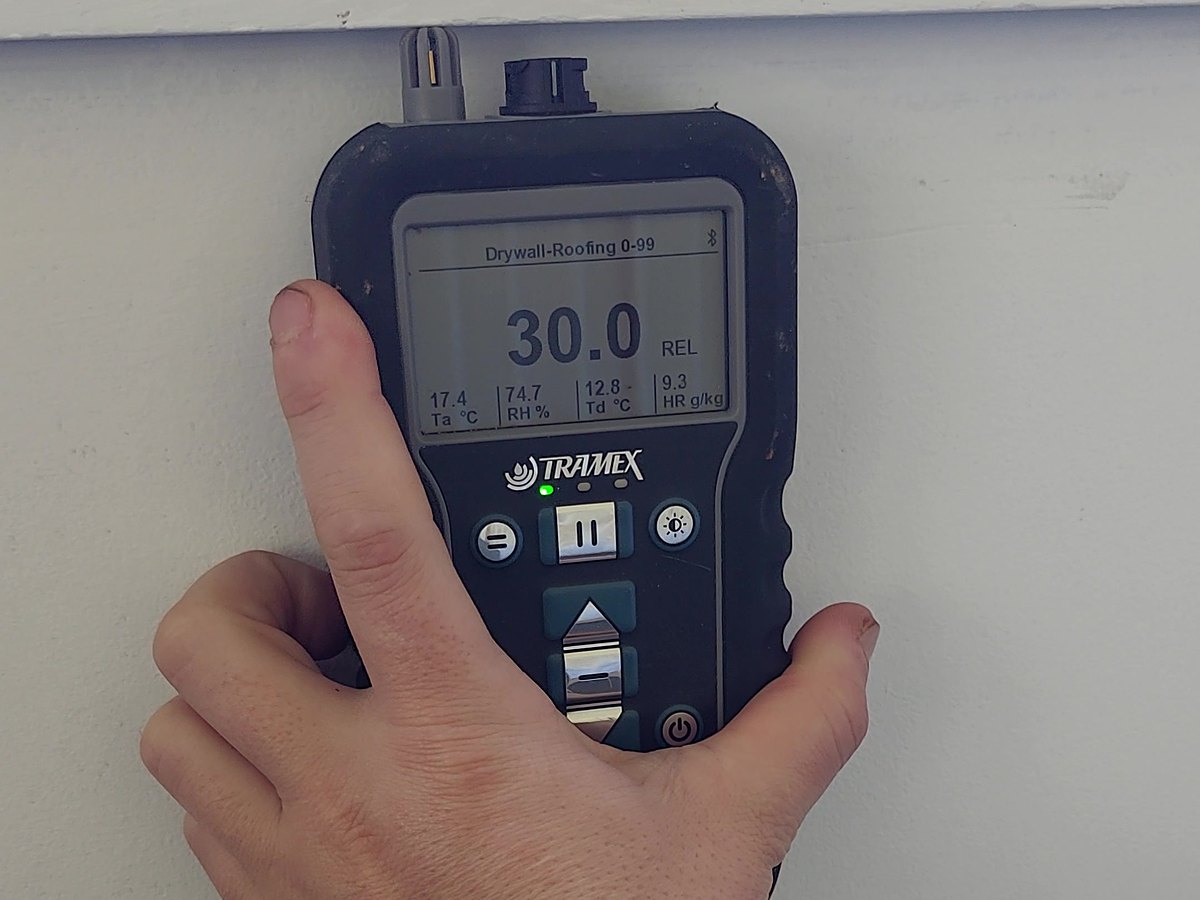
Moisture meter held flat against an inside wall

Moisture readings

Read on a set grid across the inside face of every outside wall, the floors and ceilings we can reach, plus one bathroom.
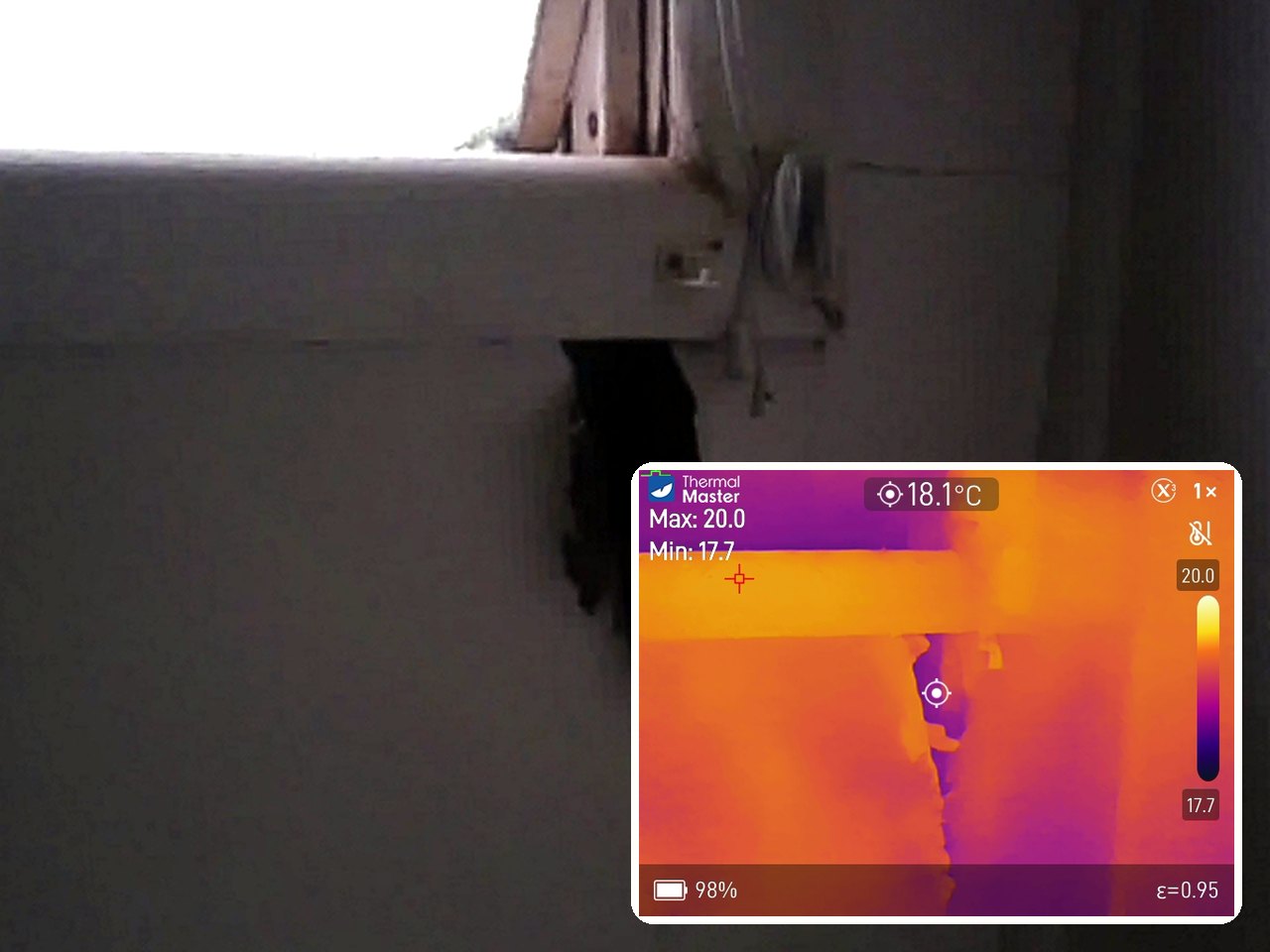
A damaged window sill in normal light, with a thermal image of the same spot inset

Thermal imaging

The same surface in normal light and in thermal. Patterns show where walls and ceilings appear cooler, and where to look closer.

Room conditions

See what changes while your property is in use.

Room sensors log temperature, humidity and CO₂ automatically through the visit and overnight. This is the humidity side, from four rooms of one real home.

Relative humidity in four rooms of one real home, logged every 5 minutes from Monday 27 to Friday 31 July 2026. The office ran the highest humidity on all four nights.Relative humidity in four rooms of one real home, logged every 5 minutes from Monday 27 to Friday 31 July 2026. The office ran the highest humidity on all four nights.
Relative humidity in four rooms of one real home, logged every 5 minutes, Monday 27 to Friday 31 July 2026. Shown as half-hour averages, all rooms on the same scale.
What we sawThe office held the highest humidity of the four rooms on every night, and sat at or near 80% through most of the first two nights.
Why it mattersIt shows which room to investigate more closely, and what else we need to find out about it.
Next stepMoisture readings and thermal images of that room's walls, and if needed, multi-day sensor logging.
How readings are taken

The same method, every wall, every time.

WhereWalls are read on the inside face of the building envelope. Floors and ceilings we can reach are read at the corners and centre of each room, with more points where something needs a closer look.
In what orderOne fixed reading sequence for every wall, floor and ceiling. Where something is in the way, the reading is taken at the nearest clear point.
With whatA non-invasive surface moisture meter for the grid. A pin probe into the material only where the surface readings call for it.
ThermalA handheld thermal camera records the same surfaces, so temperature patterns can be compared with the moisture readings.
Room conditionsA sensor in every room, plus the roof space and subfloor if you have one, logging temperature, humidity and CO₂ from 10am to 7am the next morning. Multi-day sensor logging, over three days and nights, is available as an add-on.
Additional devices

More instruments, used where the building calls for them.

Pin probe

Reads moisture inside the material, below the surface.

Where surface readings stand out
Compact thermal camera

Thermal video sweeps to spot cooler or warmer areas worth a closer look.

Observation only, no temperature figures
Vane anemometer

Shows where air is moving and how it changes, such as draughts at gaps, doors and vents.

Comparative readings only
Inspection camera

A small camera on a lead that looks into cavities and behind gaps without opening anything up.

Observation only, no readings
TriField TF2

EMF screening. Records electric, magnetic and radiofrequency field levels at selected locations.

Optional screening add-on
Coming soonDust and particles

Particle measurement is joining the indoor environment side of the assessment.

Each device has its own job. We bring the ones the building calls for.

How readings are verified

We use four ways to verify a data point.

Each record is made on site, as the meter meets the surface, so a surface moisture reading can be traced back to where and how it was taken. The records kept for a reading depend on the site and the surface. Room sensors log automatically and are recorded separately.

1Located photograph

The exact surface point, referenced to its room, wall and grid position.

Why it helps: you can see exactly where a reading came from.

2Voice log

Value, instrument mode and location, spoken on site as the reading is taken.

Why it helps: a second record of the value, made at the moment it was taken.

3Continuous video

The meter on the surface, time-matched to the logged values.

Why it helps: the placement and the value can both be checked frame by frame.

4Structured data

Value, units, instrument, mode, room, surface and time, logged through our field app.

Why it helps: clean data that can be compared on your next visit.

Traceable first. Then checked for accuracy.

These records show where and how a reading was taken. Accuracy comes from these checks:

  • Meter self-check. The moisture meter's built-in self-check is run before each moisture run.
  • Like with like. Surface moisture readings are relative to the material and meter mode, so we compare readings within the same material.
  • A second method where it matters. Where surface readings stand out, a pin probe into the material checks them.
  • Cross-checked before use. Readings used in a finding are cross-checked against the site records captured for them, and cited back to their source.

These are our own in-house checks, run on every assessment.

Review and limits

What the readings tell you, and where they stop.

How findings are reviewed

Readings used in a finding are cross-checked against the site records captured for them, and cited back to their source. Event times come from our field notes, because a sensor responds after the event.

If later checking refines a reading, your property record is updated and we let you know.

The limits

  • Surface moisture readings show where moisture is elevated. Finding the cause is the next step.
  • Thermal images show surface temperature patterns and point to where to look closer. The moisture meter confirms what they show.
  • Room sensors show conditions during the logging window only.
  • The assessment is non-invasive, apart from small pin probe readings where surface readings call for them. Where readings call for it, further investigation is recommended.
  • Home State measures building and room conditions. Health questions belong with your GP, and mould sampling is referred to a specialist tester.
Measure first

Measured evidence you can trace back, room by room.

Start with a clearer picture of your property.

Or call 0485 835 959